



We Are Open 24 Hours a Day, 7 Days a Week, Including Weekends and Public Holidays.

1000 Litre Square Water Tank Size – Efficient Water Storage Solutions for Industry & Home
Understanding 1000 Litre Square Water Tank Size: A Practical Overview
When it comes to storing water efficiently, the 1000 litre square water tank size strikes a fine balance between capacity and spatial economy. Globally, water scarcity and management challenges make proper water storage crucial, especially in industries and regions where every drop counts. Understanding this tank size isn’t just a trivial technical detail—it’s vital for planning water systems that support agriculture, humanitarian aid, and residential needs in both urban and remote areas.
Global Context: Why Does 1000 Litre Square Water Tank Size Matter?
According to the United Nations, around 2.2 billion people lack access to safely managed drinking water services. Meanwhile, the World Bank estimates that improving water storage infrastructure can drastically boost water availability, especially in drought-prone regions. A tank measuring roughly 1000 litres (or about 1 cubic meter) often becomes the sweet spot for small communities, farms, or facilities needing a compact but practical storage solution. But oddly enough, many planners still overlook the shape and modularity benefits of square tanks compared to traditional round tanks.
The square footprint reduces space wastage and enhances stacking for transport and installation, which means they fit better in tighter urban environments or uneven rural plots. Plus, this size is a familiar standard in many supply chains, making replacement and expansion more straightforward.
What Does “1000 Litre Square Water Tank Size” Actually Mean?
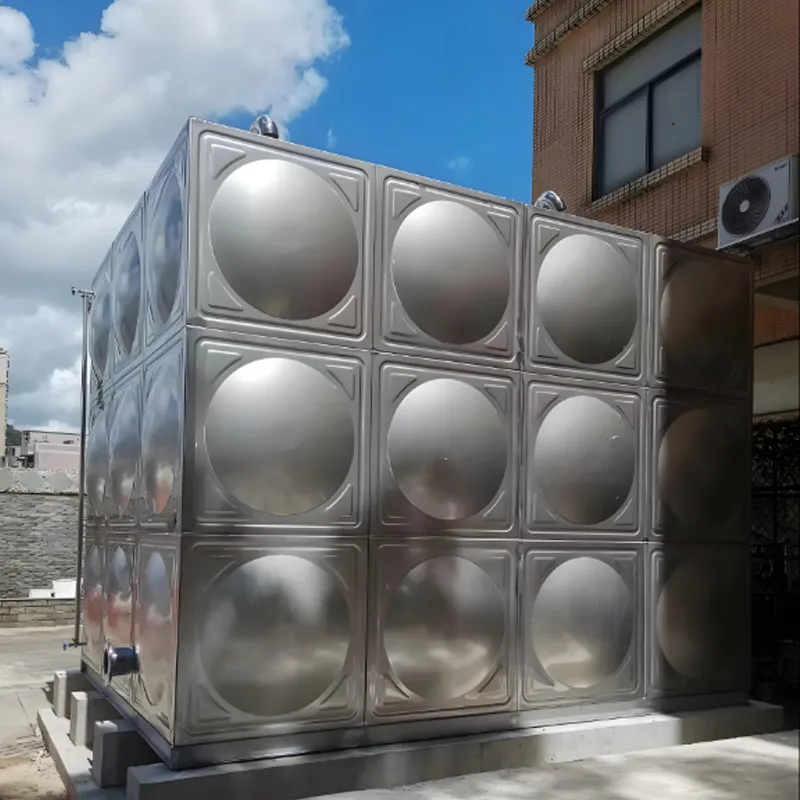
Simply put, a 1000 litre square water tank is a container designed to hold approximately 1000 litres of water—equal to about 264 gallons—in a square-shaped footprint. This differs from common cylindrical tanks in that its edges create a more volumetrically efficient shape for tight spaces. The exact dimensions can vary, but the principle is a tank about one meter high, wide, and deep. This cubic or near-cubic dimension is ideal for modular systems and standardized manufacturing.
The design aligns well with modern industrial needs—like rainwater harvesting, irrigation in agriculture, or emergency water storage after a disaster. The square shape simplifies stacking, transportation, and even manufacturing, as flat panels can be cut and assembled more efficiently than curved surfaces.
Key Features of 1000 Litre Square Water Tanks
1. Durability
Materials are usually UV-stabilized polyethylene or fiberglass reinforced plastic (FRP) designed to last for a decade or more under harsh sun exposure. Many tanks offer resistance to corrosion and algae growth, which maintains water quality longer.
2. Scalability
One of the practical perks is how these tanks are easily linked or stacked. You can plan for a few units now, then add more later without extensive infrastructure changes—perfect for growing farms or expanding industrial sites.
3. Cost Efficiency
Thanks to the simple square design, manufacturing costs tend to be lower than complex round tanks. Transport is also easier since they stack better on pallets or trucks, lowering shipping costs.
4. Space Optimization
In urban or constrained sites, the square shape maximizes usable volume without awkward gaps. It fits snugly against walls or corners, unlike round tanks which leave unusable spaces.
5. Ease of Installation
Because of their modular size, many 1000 litre square tanks are considered “plug and play” — they require minimal site prep, making set up quick, even in remote or disaster-hit areas.
Product Specifications at a Glance
| Specification | Typical Value |
|---|---|
| Capacity | 1000 litres (approx. 264 gallons) |
| Dimensions (L × W × H) | ~1 m × 1 m × 1 m (varies by manufacturer) |
| Material | UV-stabilized polyethylene or FRP |
| Weight (empty) | 20–30 kg (depending on material) |
| Lifespan | 10–15 years (with proper care) |
Mini takeaway: The 1000 litre square water tank blends robust materials with space-saving design, making it versatile for many water storage needs worldwide.
Global Applications and Real-World Use Cases
Around the world, this tank size often pops up in several key sectors. In humanitarian efforts, agencies rely on modular 1000 litre square tanks to deliver clean water fast after natural disasters. Their ease of transport and quick setup save precious time and lives.
In agriculture, especially in water-scarce regions of Africa and Asia, these tanks help farmers irrigate small plots or manage rainwater harvesting systems effectively. Urban developments with stringent spatial limits also prefer these for rooftop water storage or emergency reserves.
For industries, particularly in mining or manufacturing plants located in remote areas, on-site water storage in this size supports daily operations without dependency on distant municipal supplies.
Vendor Comparison: Top 3 Manufacturers of 1000 Litre Square Water Tanks
| Manufacturer | Material | Warranty | Average Cost (USD) | Unique Feature |
|---|---|---|---|---|
| LongXuan FRP | Fiberglass Reinforced Plastic | 10 years | $350 – $450 | High UV resistance, easy modular stacking |
| AquaTank Solutions | UV-Stabilized Polyethylene | 7 years | $300 – $400 | Customizable fittings and colors |
| GlobalWater Tanks | Rotomolded Polyethylene | 8 years | $320 – $420 | Impact resistant for rugged sites |
Mini takeaway: Choosing the right vendor often comes down to prioritizing UV durability, cost, and modular capabilities — all essential for lasting performance.
Advantages and Long-Term Value of 1000 Litre Square Water Tanks
- Reliable access to clean water: Reduces dependency on erratic water supplies.
- Space and cost efficiency: Maximizes limited installation areas while keeping expenses manageable.
- Sustainability: Supports water conservation by enabling rainwater harvesting and controlled storage.
- Social impact: Ensures dignified water access in communities, which improves health outcomes.
- Ease of maintenance: Tanks with quality materials resist algae, corrosion, and physical damage, reducing service costs.
Future Trends & Innovations in 1000 Litre Water Storage
The future looks promising. Green materials like recycled plastics and biodegradable composites are starting to make headway. Smart sensors embedded into tanks can now monitor water levels and quality remotely — a boon for rural management. Solar-powered filtration units are also beginning to integrate with storage systems, converting these tanks into mini water treatment hubs.
Moreover, design shifts lean toward modular kits that communities can assemble themselves, promoting local employment and faster deployment. Regulatory standards from ISO and WHO on potable water storage are also tightening, pushing manufacturers to innovate in safety and hygiene.
Challenges and Practical Solutions
Despite many advantages, some common issues persist: material degradation under long UV exposure, installation challenges on uneven terrain, and the occasional leakage if seals aren’t maintained. But, frankly, these are manageable with regular inspections, choosing tanks with UV additives, and employing professional installers where needed.
An emerging solution involves integrating flexible liners inside rigid frames, combining strength with leak-proof containment. Also, community training programs help users understand proper maintenance routines, dramatically extending lifespan.
Frequently Asked Questions About 1000 Litre Square Water Tank Size
- What are the typical dimensions of a 1000 litre square water tank?
- Most are close to 1 meter in length, width, and height — a near perfect cube — but exact specs can vary by manufacturer. This shape optimizes space and stacking abilities.
- Can these tanks be used for potable (drinking) water?
- Yes, when made with food-grade materials and proper sealing, these tanks safely store drinking water. Always check certifications and follow cleaning guidelines.
- How long does a 1000 litre square tank usually last?
- With quality materials and adequate care, these tanks can last 10 to 15 years. UV protection, routine inspections, and cleaning help maximize life expectancy.
- Are 1000 litre tanks suitable for rainwater harvesting?
- Absolutely. Their size and shape make them ideal for collecting roof runoff in urban or rural settings, supporting sustainable water management.
- How easy is it to transport and install these tanks?
- Because of their compact, standardized size and shape, they are relatively easy to transport even in remote areas. Installation is usually straightforward, requiring a flat base and minimal plumbing.
Conclusion
In real terms, understanding the 1000 litre square water tank size means appreciating a versatile, efficient, and practical water storage solution that supports global water security efforts. They’re pivotal in humanitarian relief, agriculture, industry, and urban water management—combining durability, ease of use, and sustainability. If you’re considering water storage solutions, these modular tanks offer a compelling blend of form and function.
Interested in learning more or sourcing reliable 1000 litre square tanks? Visit our website: https://www.longxuanfrp.com for detailed specs and expert guidance.
In the end, how we store water reflects how seriously we take conservation—something that feels more vital every year.
References






Address
20 Xingyuan South Street, Zaoqiang County, Hengshui City, Hebei Province, China


