



We Are Open 24 Hours a Day, 7 Days a Week, Including Weekends and Public Holidays.

Comprehensive Guide to 316 Stainless Steel Water Tanks – Durability & Global Use
Understanding 316 Stainless Steel Water Tanks: Durable Solutions for Global Water Storage
Water storage is a seemingly simple requirement but one that’s critical globally—whether for municipal supply, agriculture, or disaster relief. Among the many options available, the 316 stainless steel water tank stands out. Why? Because it combines corrosion resistance, longevity, and safety in a way that few other materials can. As demand for reliable, safe water storage grows worldwide, understanding the role of these tanks becomes increasingly important.
Global Importance of 316 Stainless Steel Water Tanks
With more than 2 billion people lacking safely managed drinking water services worldwide (UN, WHO 2023), having reliable storage containers is key to infrastructure, public health, and emergency preparedness. According to the International Energy Agency, water infrastructure investments exceeded $1 trillion globally in the past decade, emphasizing the need for materials that can withstand harsh environments over time.
Yet, water storage tanks often face challenges like corrosion, microbial contamination, and structural failures, especially in coastal or industrial areas. 316 stainless steel water tanks address many of these issues, offering a robust alternative to plastic, concrete, or mild steel tanks that suffer from chemical or physical degradation.
Defining a 316 Stainless Steel Water Tank
Simply put, a 316 stainless steel water tank is a container made from grade 316 stainless steel—a specific alloy known for its high corrosion resistance, especially against chlorides and industrial pollutants. This material contains molybdenum, which gives it superior strength and longevity compared to 304 stainless steel or carbon steel tanks.
Modern industries, cities, and humanitarian organizations often rely on these tanks because they assure clean water storage without leaching harmful substances, and they endure extreme environmental conditions over decades.
Key Factors of 316 Stainless Steel Water Tanks
Durability and Corrosion Resistance
316 stainless steel features exceptional resistance to rust and pitting, even when exposed to seawater or corrosive chemicals. This durability means the tank can last 20 to 40 years or more with minimal maintenance—making it financially and practically appealing for long-term deployments.
Hygienic Water Storage
The smooth surface inhibits bacterial growth and is easy to sterilize, crucial for potable water storage. Unlike concrete tanks, 316 stainless steel tanks won’t absorb contaminants or deteriorate under repeated cleaning cycles.
Scalability and Customization
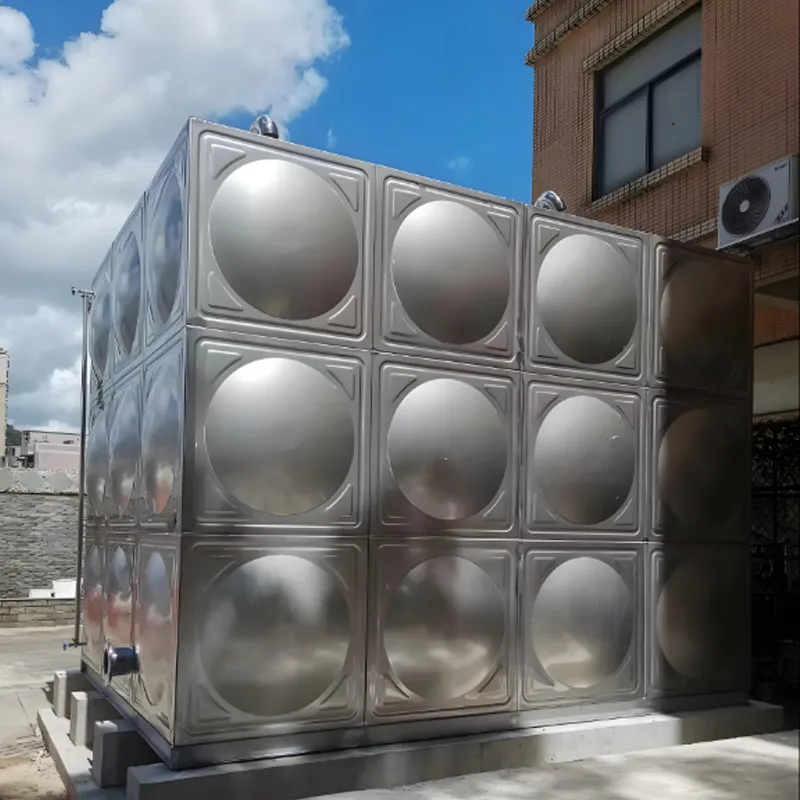
Whether for small rural clinics or large municipal plants, these tanks come in modular designs that fit diverse capacity needs—from a few hundred liters to hundreds of thousands. They can be custom-fabricated on site or factory-built, allowing flexible installation.
Cost Efficiency Over Time
While initially pricier than alternative materials, the lifecycle cost benefits—lower maintenance, fewer replacements, and reduced downtime—make them worth the upfront investment.
Environmental Sustainability
316 stainless steel is recyclable and, when paired with green energy-powered manufacturing, contributes to sustainable infrastructure development.
| Specification | Detail |
|---|---|
| Material Grade | 316L Stainless Steel (Low Carbon) |
| Capacity Range | 500 liters to 500,000 liters+ |
| Corrosion Resistance | Excellent against saline & industrial pollutants |
| Typical Wall Thickness | 1.5 mm to 5 mm |
| Applications | Drinking water, chemical storage, industrial water processing |
| Lifespan | 20-40 years with proper maintenance |
Mini takeaway: 316 stainless steel tanks excel due to their corrosion resistance, longevity, and hygienic properties, making them a trustworthy choice for varied water storage needs.
Global Applications and Use Cases
From bustling coastal cities in Southeast Asia to remote mining sites in Australia, the 316 stainless steel water tank has found diverse roles. In disaster relief zones, organizations like the Red Cross often opt for these tanks because of their rapid deployability and reliability even in harsh climates.
In industrial zones with corrosive atmospheres—think chemical plants or saline wastewater treatment—these tanks outperform carbon steel dramatically. Agricultural communities use them for irrigation water to avoid contamination risks. The healthcare sector also prefers them for sterilized water storage.
Comparison of Leading Vendors:
| Vendor | Tank Capacity Range | Customization | Warranty | Price Range (USD) |
|---|---|---|---|---|
| LongXuan FRP Co. | 500 L – 200,000 L | High – custom shapes, sizes, and fittings | 10 years | Mid to High |
| AquaSteel Inc. | 1,000 L – 150,000 L | Moderate | 8 years | Mid Range |
| GlobalTank Systems | 5,000 L – 500,000 L | Standard modular units; less customization | 7 years | Low to Mid |
Mini takeaway: Selecting the right supplier depends on ownership costs, customization requirements, and warranty commitments—LongXuan FRP’s offerings stand out for customizable and durable 316 stainless steel water tanks, especially for critical infrastructure.
Advantages & Long-Term Value
- Cost savings: Lower maintenance and longer lifespan reduce total expenditure.
- Sustainability: Recyclability and reduced material degradation support eco-friendly goals.
- Safety & Hygiene: No chemical leaching or microbial risk increases consumer confidence.
- Trust & Reliability: Proven performance in extreme conditions creates peace of mind.
Frankly, it takes a certain confidence to invest in infrastructure that outlasts its payback period, but that’s exactly where 316 stainless steel water tanks shine. The innovation here is subtle but powerful—supporting water security with no fuss.
Future Trends & Innovations
The next big step isn’t just better steel; it’s smarter tanks. Sensors integrated with IoT allow remote monitoring of water quality, fluid levels, and structural stress. This real-time data can preempt leaks or contamination before they become crises.
Materials science is also evolving. Research into hybrid alloys and nanocoatings may soon further enhance corrosion resistance and durability. Meanwhile, manufacturing powered by renewable energy sources cuts the carbon footprint significantly.
Challenges & Solutions
No solution is perfect. The higher upfront cost of 316 stainless steel tanks can deter some buyers. Installation in hard-to-reach areas may incur logistics complexity. Also, welding and fabrication require skilled labor to avoid compromising corrosion resistance.
Experts recommend lifecycle cost analysis to justify investment. Using local skilled technicians trained in stainless steel fabrication or modular, pre-fabricated panel designs can ease installation. Moreover, combining tanks with innovative coatings and maintenance programs extends life further.
Frequently Asked Questions About 316 Stainless Steel Water Tanks
- What makes 316 stainless steel better than 304 for water tanks?
- 316 stainless steel contains molybdenum, which provides enhanced resistance to chlorides and saline environments, making it more suitable for coastal or industrial water storage.
- How long do these water tanks typically last?
- With proper maintenance, 316 stainless steel water tanks can last 20 to 40 years, outliving many plastic or mild steel alternatives.
- Are 316 stainless steel tanks suitable for potable water?
- Yes, their non-porous surface and corrosion resistance ensure hygienic storage without contaminating drinking water.
- Can these tanks be customized on-site?
- Many vendors offer modular or prefabricated panel systems that can be assembled on location, allowing size and shape customization to fit specific site requirements.
- Is the investment in stainless steel tanks worth it for rural areas?
- While the upfront cost is higher, the longevity, low maintenance, and safety benefits often reduce overall costs and improve water security in rural setups.
Conclusion & Call to Action
In summation, the 316 stainless steel water tank embodies a marriage of durability, safety, and sustainability. Its role in global water infrastructure is not just technical—it’s about securing a human necessity with dignity and confidence. For those considering a reliable water storage solution, looking into 316 stainless steel options makes a lot of sense.
Want to explore the latest innovations or get a customized quote? Visit LongXuan FRP’s website for more detailed product offerings and expert advice.
It’s always the quiet advances, like corrosion-resistant tanks, that build the foundation for a healthier future.
References






Address
20 Xingyuan South Street, Zaoqiang County, Hengshui City, Hebei Province, China


