



We Are Open 24 Hours a Day, 7 Days a Week, Including Weekends and Public Holidays.

Durable FRP Sectional Water Tanks - Custom Sizes & Quality
Understanding the frp sectional water tank: An Overview for B2B Professionals
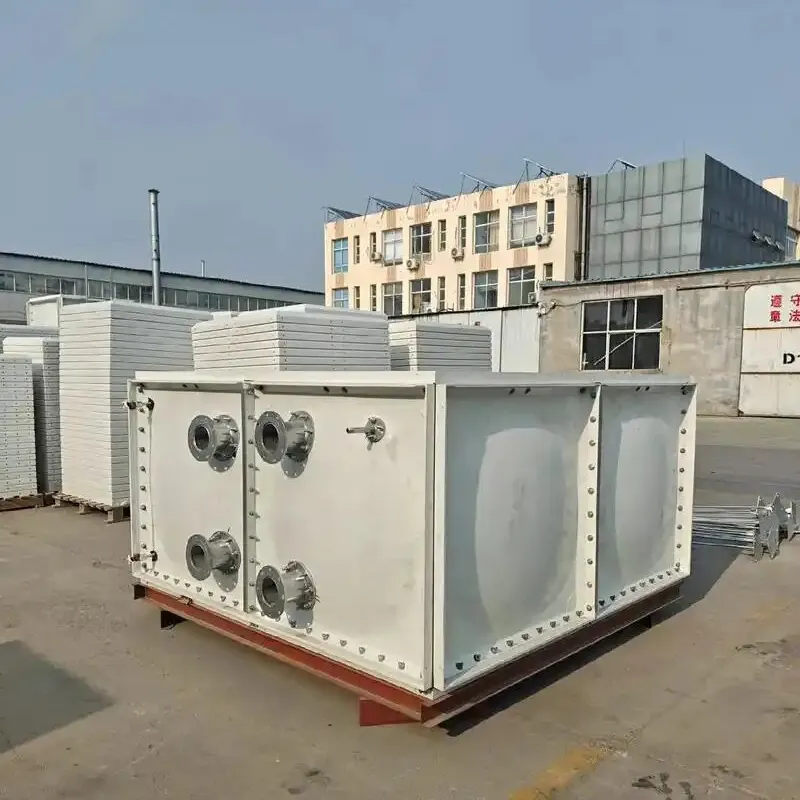
In modern industrial and municipal water management, the demand for reliable, durable, and cost-effective water storage solutions is paramount. The frp sectional water tank has emerged as a superior choice, offering significant advantages over traditional materials like concrete or steel. Fiberglass Reinforced Plastic (FRP) tanks, specifically the sectional variety, are engineered for modularity, enabling easy transportation and on-site assembly to achieve virtually any desired capacity. This introduction aims to provide B2B decision-makers and technical engineers with a comprehensive understanding of this critical infrastructure component, highlighting its technical prowess, operational benefits, and strategic implications for various sectors.
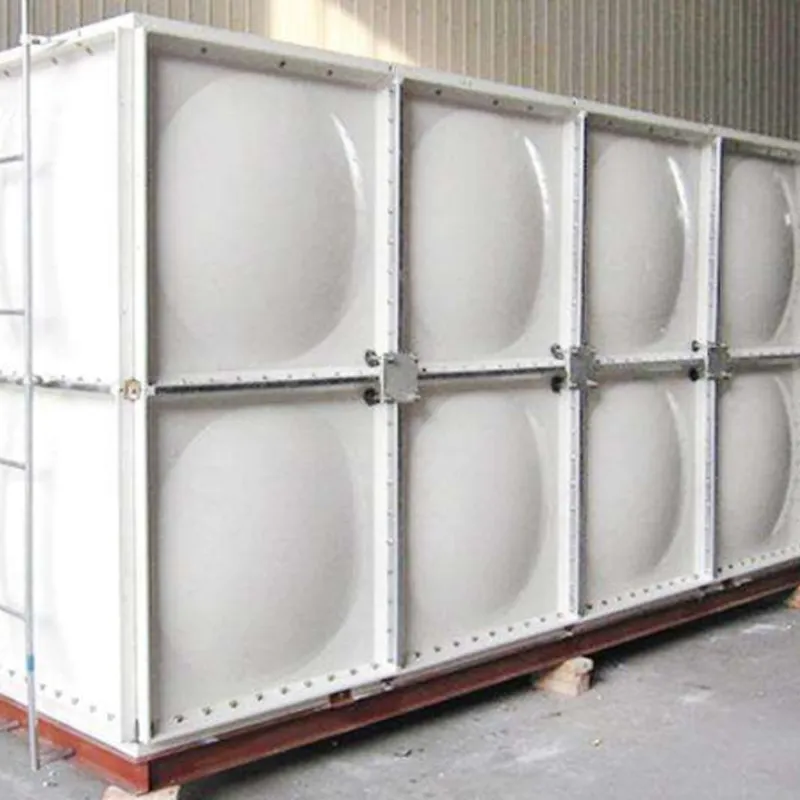
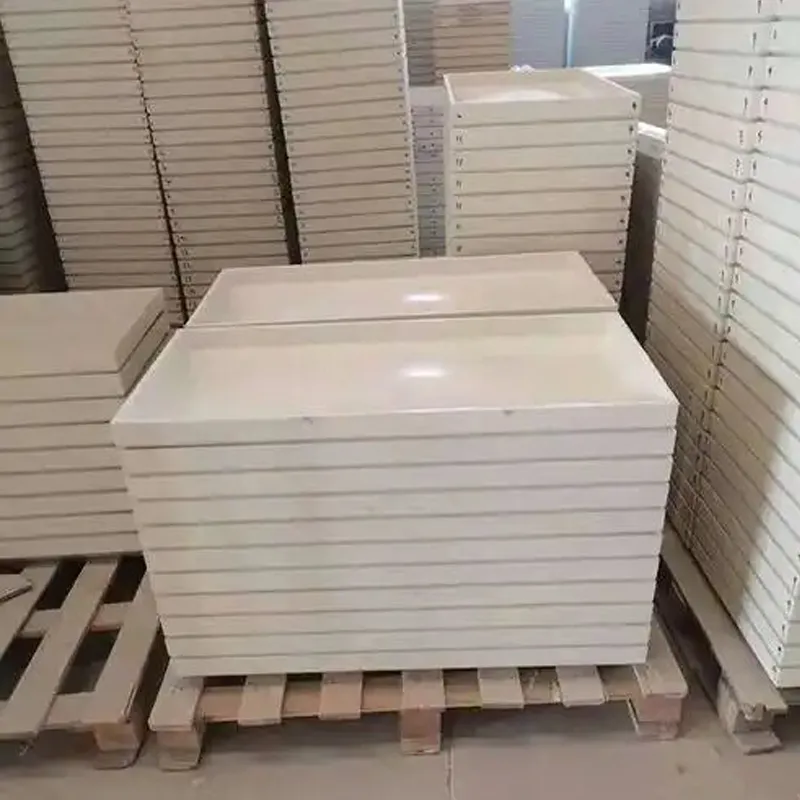
FRP is a composite material made of a polymer matrix reinforced with fibers, most commonly glass fiber. The polymer is usually an epoxy, vinylester, or polyester thermosetting plastic. Sectional tanks are constructed from individual FRP panels, which are hot-pressed and molded under high pressure, then bolted together on-site. This design flexibility makes them ideal for applications ranging from potable water storage to industrial process water, and even for chemical containment, where corrosion resistance is a critical factor. The robust engineering and material science behind these tanks ensure a long service life and minimal maintenance, translating into significant long-term savings for businesses.
The Advanced Manufacturing Process of a frp sectional water tank
The production of a high-quality frp sectional water tank is a sophisticated process involving several critical stages, ensuring product integrity and longevity. Unlike traditional metal fabrication, FRP tank manufacturing leverages advanced composite molding techniques.
- Raw Material Preparation: High-grade unsaturated polyester resin (often isophthalic for superior corrosion resistance) is mixed with chopped strand mat or woven roving E-glass fibers, catalysts, accelerators, and various additives for UV stabilization and fire retardancy. For specific applications like potable water, WRAS-approved resins are utilized.
- Sheet Molding Compound (SMC) Production: This is a key step for sectional tanks. Resin paste is spread onto two carrier films, and chopped glass fibers are introduced between them. This sandwich is then compacted and rolled into sheets of SMC, which are left to mature. SMC offers excellent uniformity and mechanical properties.
- Hot Press Molding of Panels: The SMC sheets are precisely cut and placed into heated steel molds representing the tank panels (e.g., 1m x 1m, 1m x 0.5m). Under immense pressure and elevated temperatures (typically 130-160°C), the material cures, forming dense, strong, and dimensionally stable FRP panels with smooth surfaces. This process ensures high fiber-to-resin ratio and eliminates voids.
- Curing and Demolding: After curing, the panels are demolded and allowed to cool. Post-curing might be applied for optimal mechanical property development.
- Finishing and Quality Control: Panels undergo trimming, drilling of bolt holes, and strict quality checks including visual inspection, dimension verification, barcol hardness testing, and sometimes ultrasonic testing to ensure structural integrity. Key testing standards often include ISO 9001 for quality management, and product-specific standards like JIS B8508, AWWA D107, or relevant local regulations.
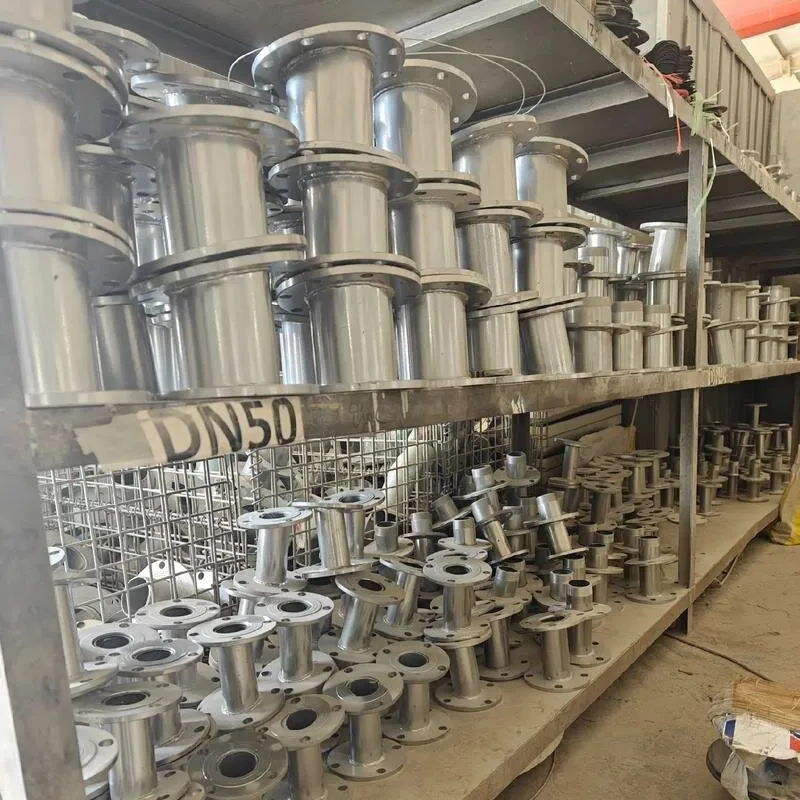
- Accessory Fabrication: Internal and external reinforcements (often galvanized steel or FRP), manhole covers, ladders, ventilation pipes, and nozzle connections are manufactured, often using similar FRP molding techniques or high-grade stainless steel.
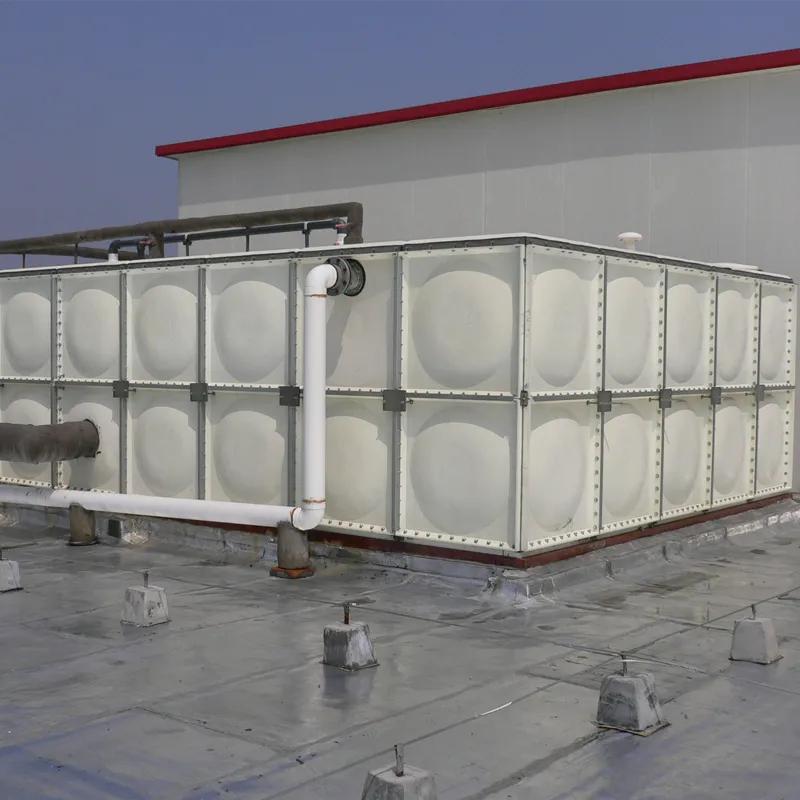
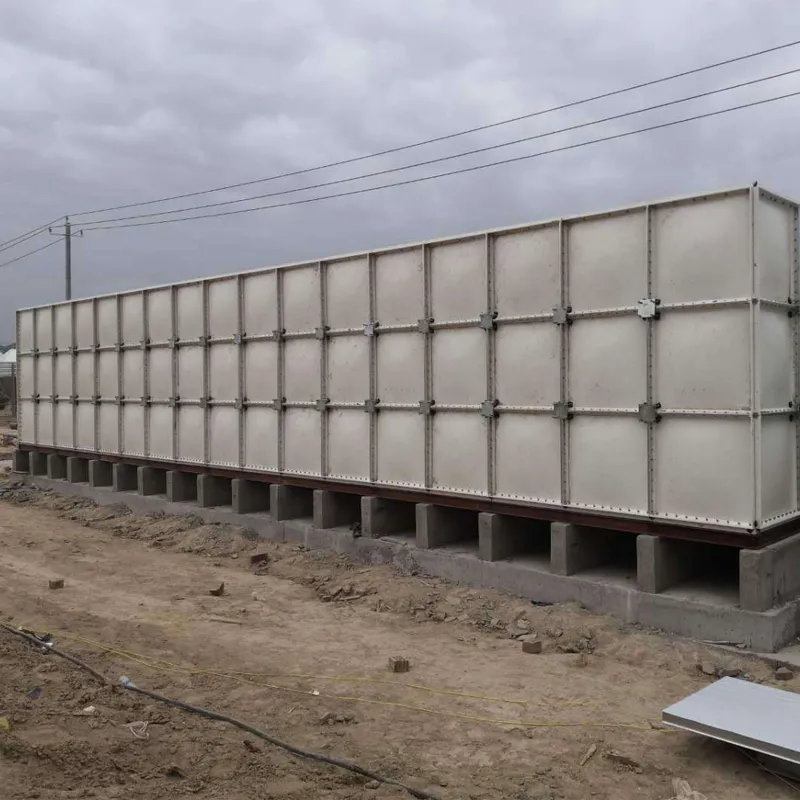
- On-site Assembly: The modular design allows for efficient transportation of panels to the site, where they are bolted together using stainless steel fasteners and sealed with non-toxic, weather-resistant sealing materials. This process provides flexibility for various frp tank sizes.
The typical service life for a well-manufactured and properly maintained frp sectional water tank is 20-30 years, often exceeding that of steel tanks due to superior corrosion resistance.
Meeting Google Standards: Expertise, Experience, Authoritativeness, and Trustworthiness
Expertise in FRP Tank Technology
Our deep understanding of composite materials and structural engineering is reflected in every frp sectional water tank. Key technical parameters are optimized for performance. For instance, panel thickness is engineered based on tank depth and capacity, utilizing Finite Element Analysis (FEA) to ensure structural integrity under hydrostatic pressure. Material selection involves specific resins: isophthalic polyester resin for general water storage due to its excellent hydrolytic stability, and vinylester resins for more aggressive chemical applications. The glass fiber reinforcement, typically E-glass, is selected for its high tensile strength (e.g., >1700 MPa for individual fibers), providing the composite its exceptional mechanical properties.
Extensive Experience Across Diverse Sectors
With over two decades of experience, Longxuan FRP has supplied thousands of tanks globally. Our tanks are deployed in:
- Petrochemical Industry: Storing demineralized water, process water, and various mild chemical solutions, benefiting from superior corrosion resistance.
- Metallurgy: Providing cooling water and raw water storage for mining and smelting operations.
- Water Supply & Drainage: Critical for municipal potable water reservoirs, fire suppression systems, and wastewater treatment plants.
- HVAC Systems: Supplying chilled water for commercial and industrial air conditioning.
- Agriculture: Irrigation water storage, particularly in remote areas due to ease of transport and installation.
Customer feedback consistently highlights the ease of installation, the low maintenance requirements, and the long-term cost savings compared to alternative materials. A recent project for a major pharmaceutical company in Europe noted a 30% reduction in installation time for a 500m³ tank compared to their previous steel tank projects, attributed to the modular design and lightweight panels.
Authoritative Certifications and Partnerships
Longxuan FRP holds ISO 9001:2015 certification for quality management, ensuring that every manufacturing process adheres to stringent international standards. Our products comply with WRAS (Water Regulations Advisory Scheme) for potable water applications, NSF/ANSI 61 for public health safety, and meet or exceed local standards such as JIS B8508 for FRP panel tanks. We have partnered with leading engineering firms and water treatment companies globally, building a reputation for reliability and quality. Our test data consistently demonstrates high performance, including:
- Tensile Strength: >100 MPa
- Flexural Strength: >180 MPa
- Barcol Hardness: >45
- Water Absorption: <0.1%
- Thermal Conductivity: 0.20 W/m·K (excellent insulation properties)
These figures are regularly verified by independent third-party laboratories.
Trustworthiness: Your Assurance of Quality and Support
We stand behind our products with comprehensive support and commitments:
- Warranty: All frp sectional water tank products come with a standard 10-year warranty against manufacturing defects, underscoring our confidence in product durability. Extended warranties are available upon request.
- Lead Time & Fulfillment: Standard panel orders for tanks up to 1000m³ typically have a lead time of 3-5 weeks from order confirmation, depending on customization. Expedited options are available for urgent projects. Our global logistics network ensures timely and efficient delivery.
- Customer Support: Our dedicated technical support team is available 24/7 to assist with design consultation, installation guidance, and troubleshooting. We offer on-site supervision and training for complex installations.
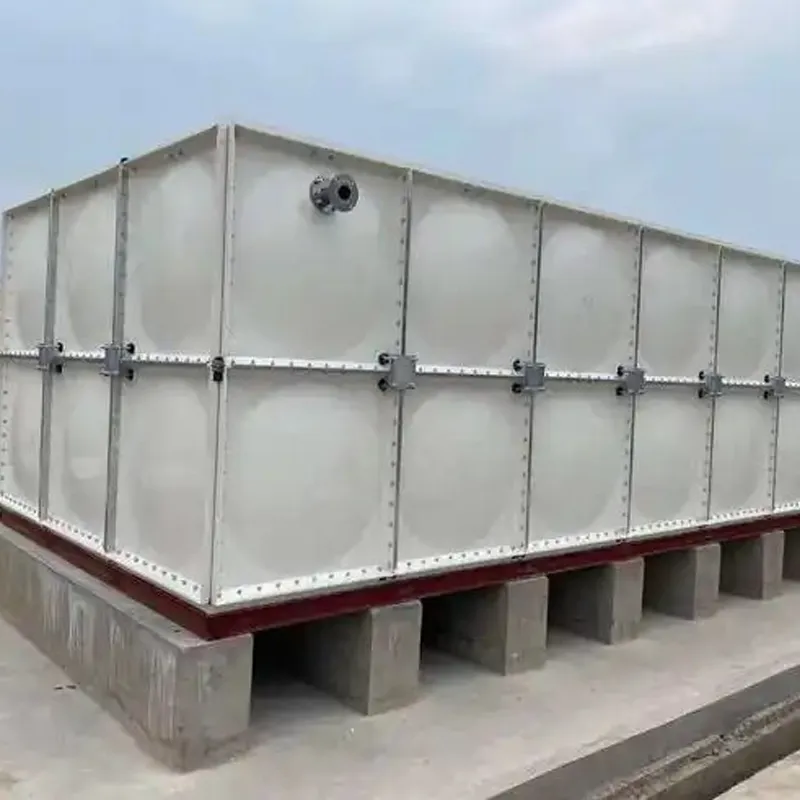
Industry Trends and Technical Specifications of FRP Water Tanks
Evolving Industry Landscape
The market for water storage solutions is rapidly evolving, driven by global urbanization, climate change, and stringent environmental regulations. Key trends impacting the frp sectional water tank sector include:
- Sustainability Focus: Increased demand for tanks made with eco-friendly resins or those with lower embodied energy. FRP tanks often have a longer lifespan, reducing waste.
- Smart Water Management: Integration of IoT sensors for real-time monitoring of water levels, temperature, quality, and leakage detection, enhancing operational efficiency and predictive maintenance.
- Modularity and Scalability: The inherent modularity of sectional tanks allows for easy expansion or relocation, aligning with dynamic infrastructure needs. This is a significant driver for various frp tank sizes.
- Advanced Composites: Development of advanced FRP composites with enhanced mechanical properties, fire resistance, and improved antimicrobial surfaces for potable water applications. This includes exploring alternatives like pp frp tanks for specific chemical resistances.
Key Technical Parameters
Understanding the specifications of a frp sectional water tank is crucial for proper selection and integration.
| Parameter | Specification |
|---|---|
| Material Composition | Isophthalic Polyester Resin, E-Glass Fiber (min. 25% by weight) |
| Panel Dimensions | 1m x 1m, 1m x 0.5m, 0.5m x 0.5m (customizable) |
| Panel Thickness | 5mm - 20mm (varies with tank height/pressure) |
| Operating Temperature | -50°C to +80°C |
| Tensile Strength | >100 MPa (ASTM D638) |
| Flexural Strength | >180 MPa (ASTM D790) |
| Water Absorption | <0.1% (ASTM D570) |
| Thermal Conductivity | 0.20 W/m·K |
| Density | 1.5 - 1.9 g/cm³ |
| Service Life | 20-30 years |
| Certifications | ISO 9001, WRAS, NSF/ANSI 61, JIS B8508, AWWA D107 |
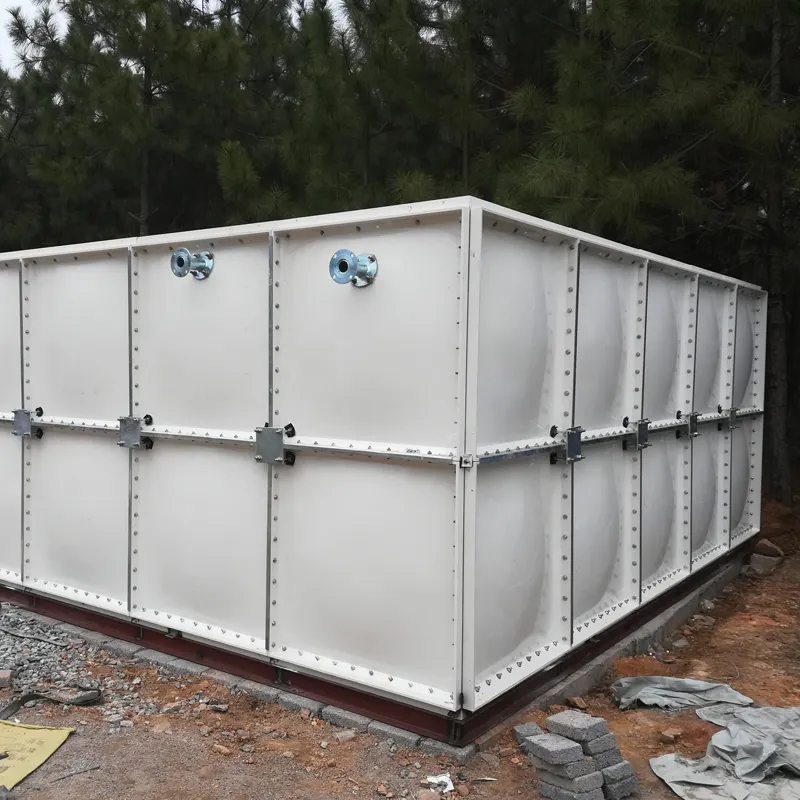
Application Scenarios and Technical Advantages
Diverse Application Scenarios
The adaptability and robust characteristics of the frp sectional water tank make it suitable for a vast array of applications:
- Potable Water Storage: Crucial for urban and rural water supply, meeting stringent health standards like WRAS and NSF/ANSI 61.
- Firefighting Water Reserves: Essential for industrial facilities, commercial buildings, and remote communities where reliable fire suppression is critical.
- Industrial Process Water: Used in manufacturing, power generation, and chemical processing plants for cooling, boiler feed, and product formulation.
- Rainwater Harvesting: An increasingly popular sustainable solution for non-potable uses, especially in regions facing water scarcity.
- Seawater Desalination Plants: Ideal for storing desalinated water due to its high resistance to corrosion from chloride ions.
- Agricultural Irrigation: Large capacity storage for farms and agricultural enterprises.
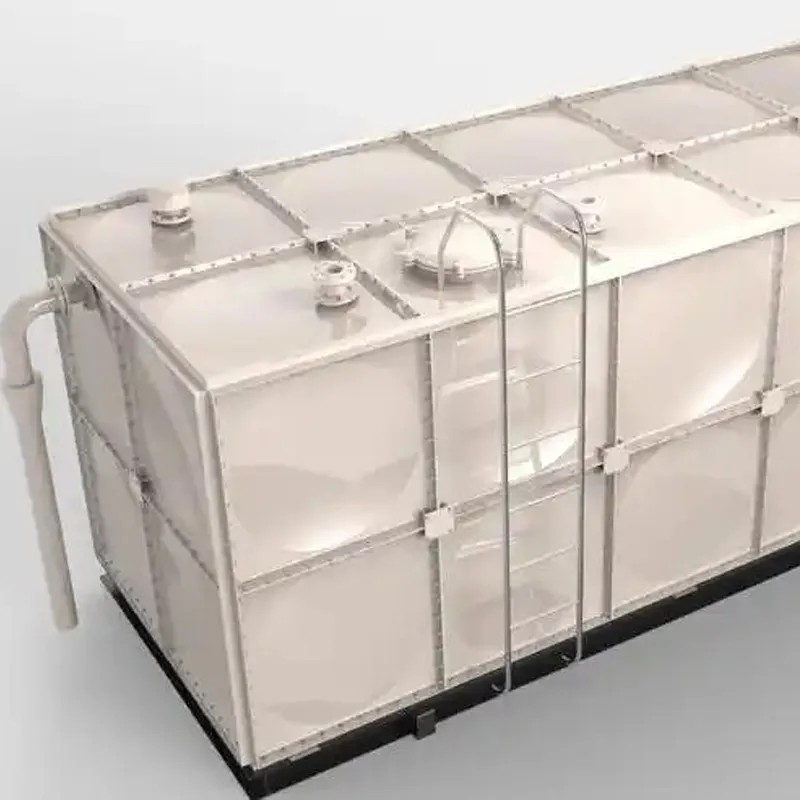
Outstanding Technical Advantages
The intrinsic properties of FRP provide a multitude of benefits over conventional materials:
- Exceptional Corrosion Resistance: Unlike steel, FRP does not rust, corrode, or require cathodic protection, even in harsh environments or with aggressive water chemistries. This translates to significantly reduced maintenance costs and an extended service life.
- Lightweight and High Strength-to-Weight Ratio: FRP panels are significantly lighter than steel or concrete, simplifying transportation, handling, and installation. This often results in lower foundation costs and allows for installation in locations where heavy equipment access is limited. Despite being lightweight, FRP exhibits high tensile and flexural strength, making it very durable.
- Modular and Flexible Design: The sectional design allows for highly customizable frp tank sizes and shapes, accommodating various capacities and challenging site dimensions. Tanks can be expanded or relocated as needs evolve.
- Hygienic and Non-Toxic: The smooth, non-porous inner surface of FRP panels prevents bacterial growth, algae formation, and sediment accumulation, making it ideal for potable water. WRAS/NSF certified materials ensure water quality.
- Excellent Thermal Insulation: FRP has a low thermal conductivity, meaning it helps maintain stable water temperatures, reducing energy costs for heating or cooling, and preventing condensation on the exterior. This contributes to overall energy saving.
- UV Resistance: External panels are often treated with UV inhibitors or a special gel coat to prevent degradation from sunlight, ensuring long-term aesthetic and structural integrity.
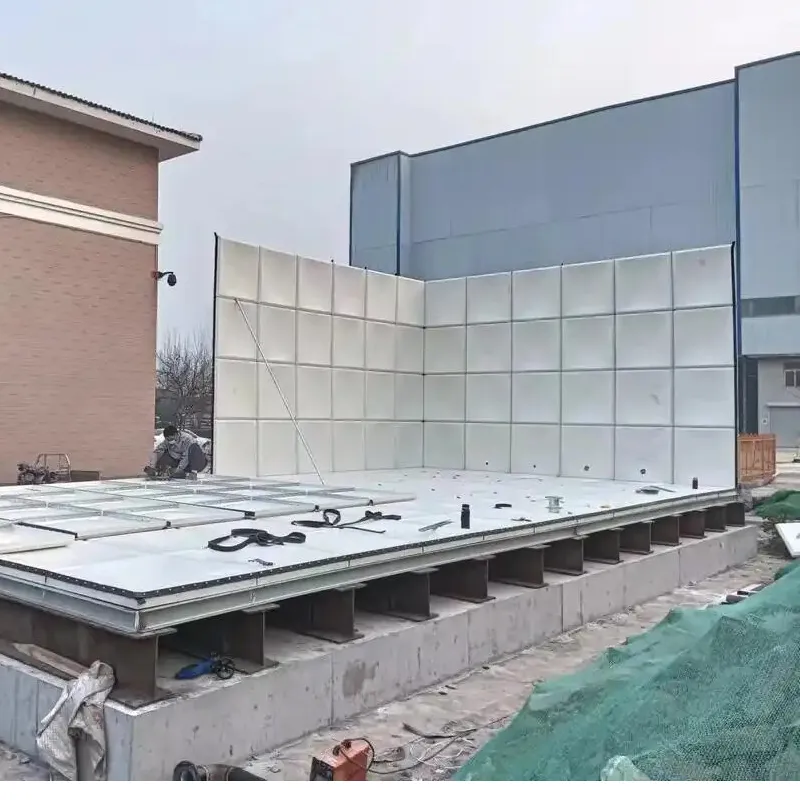
Vendor Comparison and Customized Solutions for FRP Tanks
Choosing the Right frp water tank manufacturer
Selecting an appropriate frp water tank manufacturer is critical for ensuring product quality, project success, and long-term reliability. Key factors to consider include:
- Certifications and Compliance: Ensure the manufacturer holds relevant quality (ISO), health (WRAS, NSF), and industry-specific certifications.
- Experience and Track Record: A proven history of successful installations and positive client testimonials.
- Technical Expertise: Ability to provide engineering support, detailed drawings, and expert advice on complex projects.
- Customization Capabilities: Flexibility in tailoring tank dimensions, fittings, and accessories to specific project requirements.
- After-Sales Support: Availability of technical assistance, spare parts, and warranty service.
- Competitive frp water tank price: While not the sole determinant, a balance between cost and quality is essential. Transparency in pricing and clear breakdowns are preferred.
Product Comparison: FRP vs. Steel Tanks
| Feature | FRP Sectional Tank | Steel (Galvanized/Stainless) Tank |
|---|---|---|
| Corrosion Resistance | Excellent, no rust, ideal for various water types. | Good (galvanized), Excellent (stainless), but still susceptible to specific chemical attacks or coating failures. |
| Weight | Lightweight, easier transport & installation. | Heavy, requires stronger foundations & lifting equipment. |
| Maintenance | Low; no painting, minimal cleaning. | Moderate to High; requires periodic coating inspection, painting, and rust removal. |
| Insulation Properties | Good natural insulation, reduces condensation. | Poor; requires external insulation to prevent heat loss/gain and condensation. |
| Installation Speed | Fast due to modular panels and lighter weight. | Slower, often involves welding or heavier panel assembly. |
| Service Life | 20-30 years, often longer. | 10-20 years (galvanized), 20-30+ years (stainless with proper maintenance). |
| Cost (Initial) | Generally competitive, especially for larger capacities. | Can be lower for small galvanized, higher for stainless. |
| Cost (LCC - Life Cycle) | Lower due to minimal maintenance and long lifespan. | Higher due to maintenance, potential replacements, and operational costs. |
Customized Solutions
Recognizing that every project has unique demands, Longxuan FRP specializes in offering highly customized frp sectional water tank solutions. This includes:
- Capacity & Dimensions: Tanks can be designed for capacities ranging from 1m³ to 5000m³ or more, with adjustable height, width, and length to fit precise site constraints.
- Fittings and Connections: Custom placement and sizing of inlets, outlets, overflows, drains, manholes, and ventilation points. Options for flange types (e.g., ANSI, DIN) and material (FRP, SS304/316).
- Internal & External Reinforcement: Tailored reinforcement systems (internal tie-rods, external strongbacks) based on tank size and seismic requirements.
- Insulation and Heating: Integrated thermal insulation (e.g., polyurethane foam) for temperature-sensitive applications, or external heating elements for anti-freeze requirements.
- Accessories: Custom ladders, catwalks, anti-vortex plates, level indicators, and intelligent monitoring systems.
Application Case Studies and Frequently Asked Questions
Real-World Application Case Studies
Our frp sectional water tank solutions have been successfully implemented in numerous challenging projects worldwide.
- Municipal Water Authority, Southeast Asia: Installation of a 2,500 m³ potable water storage tank in a densely populated urban area. The modular design allowed for panel delivery through narrow city streets and assembly on a constrained rooftop, overcoming logistical challenges that would have been impossible for pre-fabricated tanks. The project was completed 20% ahead of schedule due to the ease of assembly.
- Remote Mining Camp, Africa: Deployment of a 500 m³ fire suppression water tank in an arid, isolated region. The lightweight FRP panels were easily transported by cargo plane and assembled with minimal heavy machinery, reducing infrastructure costs and environmental impact. The corrosion-resistant properties are crucial in the mineral-rich, sometimes acidic local water sources.
- Food Processing Plant, Europe: Commissioning of a 1,000 m³ chilled water storage tank for a major food and beverage facility. The superior thermal insulation of the FRP tank maintained water temperature with minimal energy input, resulting in verified energy savings of approximately 15% compared to their previous steel tank with external insulation. The hygienic internal surface ensures no contamination of process water.
Frequently Asked Questions (FAQ)
- Q: How do you determine the appropriate frp tank sizes for my project?
- A: Our engineering team works closely with clients to assess specific needs, including daily consumption, peak demand, fire reserve requirements, and site constraints. We use this data to calculate the optimal capacity and recommend suitable dimensions for your frp sectional water tank.
- Q: What is the typical maintenance schedule for an FRP tank?
- A: FRP tanks require minimal maintenance. We recommend an annual inspection for seal integrity and internal cleanliness. For potable water tanks, periodic cleaning (every 3-5 years, or as local regulations demand) is advised to prevent sediment buildup. No painting or rust treatment is needed, significantly reducing long-term operational costs compared to steel tanks.
- Q: Can the frp sectional water tank be installed underground?
- A: While primarily designed for above-ground or rooftop installations, special reinforcements and design considerations can allow for semi-underground placement. Fully underground installation typically requires custom-designed cylindrical FRP tanks engineered for external soil pressure. Please consult with our technical team for specific requirements.
- Q: What affects the frp water tank price?
- A: The price is influenced by several factors: total capacity, tank dimensions (height, length, width), panel thickness (which varies with height), type of resin used (e.g., isophthalic vs. vinylester), internal/external reinforcement requirements, number and type of accessories (ladders, manholes, nozzles), and any specialized insulation or heating. Our team provides detailed quotations based on your project specifications.
- Q: Are your tanks suitable for hot water storage?
- A: Standard FRP panels are suitable for water temperatures up to 80°C (176°F). For higher temperatures, specialized high-temperature resins and manufacturing processes are employed. Please specify your temperature requirements during inquiry.
Conclusion
The frp sectional water tank represents a pinnacle of modern water storage technology, combining advanced material science with intelligent modular design. Its unparalleled corrosion resistance, lightweight nature, hygienic properties, and long service life offer a compelling value proposition for a wide range of industrial, municipal, and commercial applications. By understanding the detailed manufacturing process, comprehensive technical specifications, diverse application advantages, and the commitment to quality and service from a reputable frp water tank manufacturer like Longxuan FRP, B2B decision-makers can confidently invest in a solution that ensures reliable, safe, and cost-effective water management for decades to come. We invite you to explore our customized solutions to meet your specific project requirements.
References
- ASTM International. (n.d.). ASTM D638 - Standard Test Method for Tensile Properties of Plastics. Retrieved from ASTM website.
- ASTM International. (n.d.). ASTM D790 - Standard Test Methods for Flexural Properties of Unreinforced and Reinforced Plastics and Electrical Insulating Materials. Retrieved from ASTM website.
- ASTM International. (n.d.). ASTM D570 - Standard Test Method for Water Absorption of Plastics. Retrieved from ASTM website.
- International Organization for Standardization. (n.d.). ISO 9001:2015 - Quality management systems. Retrieved from ISO website.
- WRAS (Water Regulations Advisory Scheme). (n.d.). UK Water Regulations. Retrieved from WRAS website.
- NSF International. (n.d.). NSF/ANSI 61 - Drinking Water System Components – Health Effects. Retrieved from NSF website.
- Japan Industrial Standards. (n.d.). JIS B8508 - FRP panel tanks for water storage. Retrieved from JIS website.
- American Water Works Association. (n.d.). AWWA D107 - Factory-Coated Bolted Carbon Steel Water Tanks. (While this specifically covers steel, it sets general benchmarks for tank performance which FRP also meets or exceeds in various aspects). Retrieved from AWWA website.
- Middendorf, J. (2004). Composite Materials: A Review. Applied Composite Materials, 11(5), 297-317.
- Gibson, R. F. (2012). Principles of Composite Material Mechanics (3rd ed.). CRC Press.






Address
20 Xingyuan South Street, Zaoqiang County, Hengshui City, Hebei Province, China


