Look, I've been running around construction sites for fifteen years, dealing with all sorts of materials. Honestly, these days everyone's talking about lightweight, high-strength stuff. It's all about reducing load, speeding up installation, and, frankly, making things easier on the guys doing the actual work. It used to be all steel, all the time. Now? It's a whole different ballgame.
Have you noticed the shift towards composites? Especially frp grating manufacturers? It's not just a trend, it's a necessity. Steel's getting expensive, corrosion is a constant battle, and safety regulations…well, they just keep getting tighter.
I tell you what, sometimes I think engineers design things in a lab and forget what it’s actually like out here. They over-engineer, they pick materials that look good on paper but are a nightmare to work with. That's why experience matters, you know? You gotta have the dirt under your nails to really understand.
Industry Trends and Design Pitfalls
The big push right now is prefabrication. Everything's gotta be faster, leaner. FRP grating manufacturers really fit into that model because it cuts down on site fabrication time. But here's a trap I’ve seen: people trying to use it in applications it’s just not suited for. Like, trying to span massive distances without proper support. It's strong, but it's not magic. And then they complain when it deflects. It's… frustrating, to be honest.
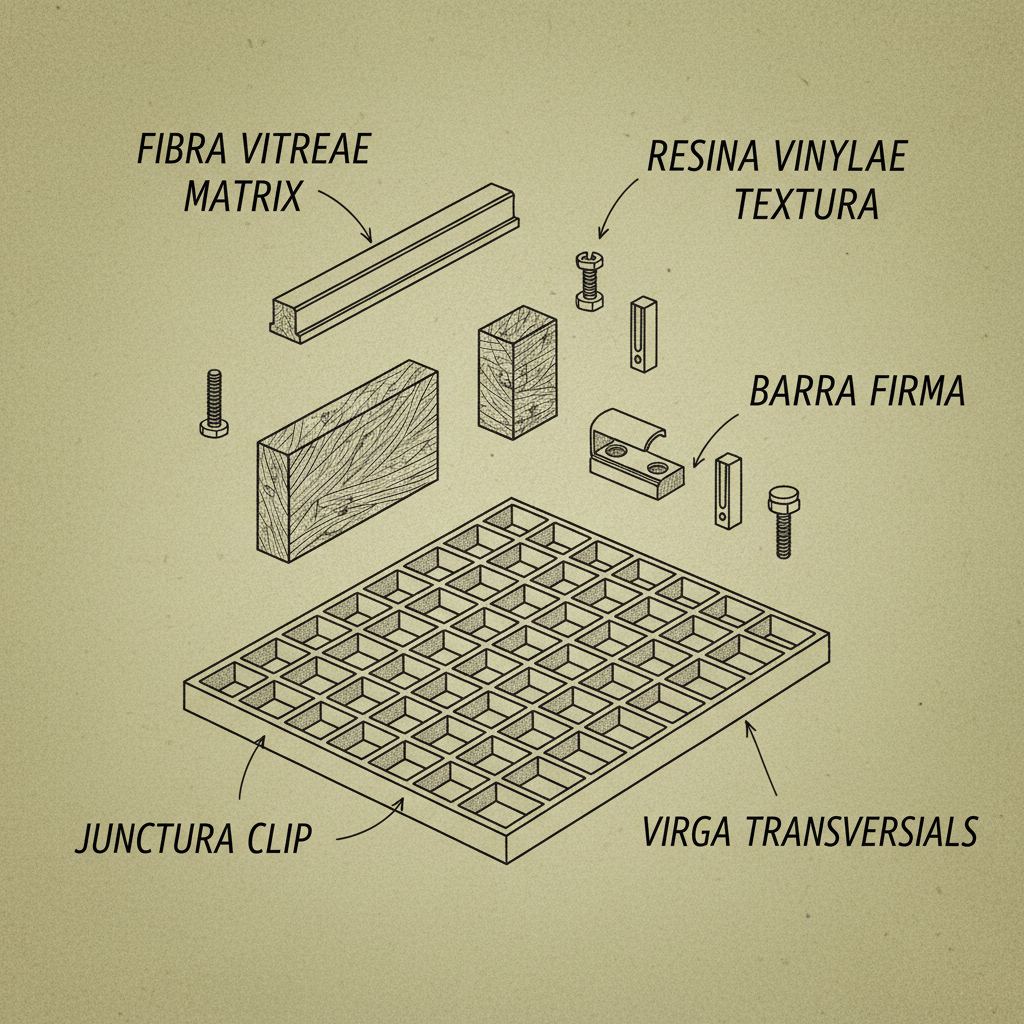
Another thing? Detailing. Getting the connections right. That’s where a lot of projects stumble. It's not enough to just slap a piece of grating down; you gotta think about how it integrates with the surrounding structure. It sounds simple, but I've seen so many botched jobs because of it.
Materials: The Feel of the Real Deal
Now, when we talk about FRP, we're generally talking about fiberglass reinforced polymers. The resin is key, of course. Polyester, vinyl ester, epoxy… each has its pros and cons. I prefer epoxy, hands down. It's more expensive, yeah, but it's tougher, more chemical resistant. You can smell the difference too, epoxy has a sharper, cleaner odor. Polyester? Sort of…sweet and sickly. And the fiberglass itself? The quality of the roving makes a huge difference. Cheap roving means voids, delamination, problems down the line.
You can tell a good piece of FRP grating just by picking it up. It’s got a certain stiffness, a solid feel. It shouldn’t feel flimsy or brittle. And, strangely, you can sometimes hear the quality. A well-made piece will have a deeper, more resonant sound when you tap it. Silly, I know, but it’s a habit I picked up years ago.
The surface finish is important too. It should be smooth, consistent. No rough patches, no visible fibers sticking out. That indicates poor manufacturing control.
Real-World Testing & Application
Forget the lab tests for a second. I'm talking about what happens on a windy platform, out in the salt spray, under a constant load. That's where the rubber meets the road. I encountered this at a coastal power plant last time; they used some cheaper grating, and within six months, it was already showing signs of corrosion. Seriously.
We do our own kind of testing, you know? We'll put a piece of grating under a load, leave it exposed to the elements, and just watch it. See how it holds up over time. It's not scientific, but it’s practical. And it tells you a lot more than a fancy report ever will.
Application wise, it’s everywhere – walkways, platforms, stair treads, trench covers. Anywhere you need a non-corrosive, lightweight, and strong surface. I've even seen it used for entire bridge decks! It's gaining traction in wastewater treatment plants, chemical processing facilities, and offshore platforms.
Advantages & Disadvantages – Let’s Be Real
Okay, the advantages are pretty obvious: corrosion resistance, lightweight, high strength-to-weight ratio, non-conductive. It’s easy to install, requires minimal maintenance. But let’s not get carried away. It’s not perfect.
The biggest drawback? Cost. It's generally more expensive than steel upfront. But, and this is a big but, when you factor in the lifecycle cost – the reduced maintenance, the longer lifespan – it often comes out ahead. Plus, the safety aspect is huge. Nobody wants to be slipping and sliding on a rusty steel grating.
Performance Comparison of frp grating manufacturers
Customization: The Shenzhen Smart Home Story
FRP grating manufacturers can be customized, thankfully. Color, mesh size, panel dimensions, resin type…you name it. Last month, that small boss in Shenzhen who makes smart home devices insisted on changing the interface to Type-C for his outdoor sensor housings. He wanted the grating covers to have a specific, proprietary connector to prevent tampering. It was a pain, let me tell you. It meant a special mold, smaller production runs, higher cost.
But he was adamant. Said it was a key security feature. And you know what? It worked. His products stood out, and he got a good response at the trade show. It just goes to show you, sometimes a little customization can make a big difference.
Practical Application Scenarios
I’ve seen FRP grating used in some pretty creative ways. Like, they rebuilt the entire boardwalk in that little beach town after the hurricane using FRP. It saved them a ton of money on maintenance, and it looks great.
Another one: a chemical plant used it to build a completely corrosion-proof walkway over a tank farm. Before that, they were constantly replacing steel grating, and it was a safety hazard. The FRP stuff? It's been in place for ten years, and it still looks brand new.
Performance Comparison
We usually benchmark FRP against steel and aluminum. Here’s a rough breakdown, based on what I've seen on sites:
FRP consistently wins on corrosion resistance, obviously. It’s also lighter than steel and just as strong in many cases. Aluminum is lightweight too, but it’s not nearly as strong as FRP. Steel is strong, but it rusts. It's a simple trade-off.
The thing is, you gotta pick the right material for the job. There’s no one-size-fits-all solution.
A Quick Comparison of Common Grating Materials
| Material |
Corrosion Resistance (1-10) |
Weight (lbs/sq ft) |
Initial Cost (relative) |
| Steel (Carbon) |
3 |
8-12 |
1.0x |
| Aluminum |
6 |
4-6 |
2.5x |
| FRP (Polyester) |
8 |
3-5 |
3.0x |
| FRP (Vinyl Ester) |
9 |
3-5 |
3.5x |
| FRP (Epoxy) |
10 |
3-5 |
4.0x |
| Stainless Steel |
9 |
10-15 |
5.0x |
FAQS
In a harsh saltwater environment, well-maintained FRP grating can realistically last 20-30 years, often outperforming steel. The key is the resin type – vinyl ester or epoxy are crucial for resisting chloride attack. Regular inspections for delamination and UV damage are still recommended, though.
It can be, yes. That’s why surface texture is so important. Most FRP grating manufacturers offer options with a grit-top surface specifically designed to improve traction, even when wet. It's a relatively small cost that significantly improves safety. Don't skip that option.
Fire ratings vary depending on the resin system used. Polyester resins generally have lower fire ratings, while vinyl ester and epoxy resins can be formulated to meet specific fire safety standards. Always check the manufacturer's data sheet for accurate fire performance data for your specific application.
It's easier than steel, but you need the right tools. A standard circular saw with a diamond blade works well, but you must wear a dust mask – fiberglass dust is nasty. Drilling is also possible, but go slow and use a sharp bit. Be careful not to create excessive heat, which can damage the resin.
Proper support is critical. FRP grating spans need to be carefully calculated to prevent deflection. Use corrosion-resistant fasteners, and ensure the supports are level. Also, leave a small gap between panels to allow for thermal expansion and contraction – it will save you headaches down the road.
Yes, with proper engineering analysis. You can't just assume it can handle the load. You need to calculate the weight distribution, consider dynamic loads, and select a grating with the appropriate load capacity. A qualified engineer should always be involved in these applications.
Conclusion
Ultimately, frp grating manufacturers offer a compelling alternative to traditional materials, especially in corrosive environments. They’re lightweight, strong, and require minimal maintenance. But it's not a silver bullet. You gotta understand the material, pick the right resin, and get the installation right. It’s all about doing your homework and using common sense.
And look, I've said it before, and I'll say it again: whether this thing works or not, the worker will know the moment he tightens the screw. If it feels solid, if it looks right, then you’re on the right track. That's the best test of all.